
new
You know there is something profoundly wrong with the Supreme Court appointment process when the dying wish of an 87-year-old Supreme Court Justice is “not to be replaced until a new president is installed.”
One thing is clear: the last thing an already dangerously polarized country needs is an equally polarized Supreme Court. If anything, we need the exact opposite.
 The Courtroom of the Supreme Court showing Associate Justice Ruth Bader Ginsburg’s Bench Chair and the Bench in front of her seat draped in black following her death on September 18th, 2020. Credit: Photograph by Fred Schilling, Collection of the Supreme Court of the United States.
Obviously the Republicans haven’t gotten the message, though, with their refusal to give Obama’s Supreme Court nominee Merrick Garland a hearing in 2016, and their nominations of the highly conservative Neil Gorsuch, Brett Kavanaugh, and now Amy Coney Barrett.
But then neither have the Democrats. Viewing a conservative Court as a threat to the realization of their agenda, they are openly discussing adding seats to the Court—aka court-packing—should they capture the White House and the Senate, an ill-advised move that would turn the last independent branch of government into a political tool.
It’s very disappointing, really. Because now more than ever we need the Democrats to be the adults in the room. And igniting a Supreme Court arms race, destroying the Court’s independence just because the Republicans stole a Supreme Court nomination in 2016, would be a very childish, irresponsible thing to do; not to mention dangerous.
Why court-packing is such a terrible idea
Aside from the fact that court-packing would basically turn the Court into a rubber stamp for the ruling party, the most obvious reason is that there is no end to it. As Bernie Sanders told The New York Times last year: “Packing the courts is a great idea when you’re in power, not such a great idea when your political opponents are in power.” (More recently he has sidestepped the issue, though. I wonder why.)
The late Justice Ruth Bader Ginsburg was also against court-packing, calling President Franklin Roosevelt’s plan to pack the court “a bad idea” in an NPR interview a little over a year before her death.
Ginsburg said that, “If anything would make the court look partisan it would be that — one side saying, ‘When we’re in power, we’re going to enlarge the number of judges, so we would have more people who would vote the way we want them to.’”
Other progressives, though, like The Times’ Jamelle Bouie, an ardent advocate for court packing, are ready to do whatever it takes to make the Court safe for Progressiveness. Discussing court-packing in a podcast, Bouie said he assumed “the tit for tat would actually have to stop at some point,” adding that playing hardball “might produce a desire for a truce.”
It’s a startlingly callous observation for a journalist of Mr. Bouie’s caliber, and one that glosses over two important follow-up questions: 1) at what price would this “tit for tat” come?—think, for instance about the tremendous cost of the nuclear arms race and its lasting consequences—and 2) who will win?
How court-packing would likely play out
One foreboding example of how court-packing might play out in reality is the situation in Poland, a country that is now dangerously close to becoming an authoritarian state, even though it is a member of the European Union.
In 2018, the ruling right-wing Law and Justice Party added 44 justices to the Supreme Court in an effort to get more grip on the Polish Supreme Court. And it worked, too, because when the Polish presidential election of 2020 turned out to be very close, the Polish Supreme Court validated the win by the conservative incumbent despite thousands of reported irregularities. How surprising.
And anyone who thinks a left-wing government would not abuse a court stacked heavily in its favor need only look at how court-packing turned out in Venezuela.
I certainly hope this is not the kind of America Mr. Bouie and other progressives who are championing court-packing envision. Because that would make them the same as President Trump (if not worse, because they actually do care about the country). And of course eventually, inevitably, the pendulum will swing the other way again. It always does.
How to make the Supreme Court more aligned with a political agenda is the wrong question. The right question is how to make it less political.
So, how do we make the Court less political?
The easy answer is: take the confirmation process away from politicians. Unfortunately, the reality is more complicated.
Article II, Section 2 of the Constitution gives the President the power “by and with the advice and consent of the Senate,” to nominate “judges of the Supreme Court.”
Taking the appointment process away from Washington would make it far less politicized. One way to do that would be to choose new justices randomly from the 13 courts of appeals, instead of having them nominated by the President and confirmed by the Senate.
However, this would require changing the Constitution, which is notoriously difficult to do and would require the support of the Republicans, who are notoriously averse to change.
But there is another way to make the Supreme Court appointment process less political, more fair, and likely less polarizing:
Term limits
The idea of term limits for Supreme Court justices has been gaining traction the last couple of years. Specifically staggered, 18-year term limits, with a new justice added every other year (9 justices x 2 years =18).
This would guarantee each president two Supreme Court nominations per term, which would be more democratic and also make Court appointments far more predictable. It would also rein in the influence of individual judges — some of whom sit on the Court for more than thirty years — and make retirement no longer a political issue (as it was for Justices Kennedy and especially Ginsberg).
As justice Stephen Breyer said in 2019: “I think it would be fine to have long terms, say 18 years or something like that for a Supreme Court justice. It would make life easier. I wouldn’t have to worry about when I’m going to have to retire or not, and that would be easier for me.” (In the same interview Breyer also said not to be in favor of expanding the court, though. “Nine is fine.”)
Do term limits require constitutional amendment?
It’s not entirely clear.
Article III, Section 1 of the Constitution says that “The judges, both of the supreme and inferior courts, shall hold their offices during good behaviour.”
Traditionally, “good behaviour” has been interpreted as lifetime, but it doesn’t actually say that. Several scholars have argued that justices could still be considered to “hold their office” if they would return to an appellate court after serving their term at the Supreme Court, or go into semi-retirement and serve as reserve justices for when an active justice has to recuse himself.
Harvard constitutional law scholar Laurence Tribe, for instance, holds that “the Constitution guarantees life tenure as an Article III Federal Judge, not lifetime service on the Supreme Court. If I’m right about that, then only an Act of Congress would be needed, not an Amendment to the Constitution.”
One thing is certain: most Americans want term limits. A PSB poll conducted in May 2020 showed 77% of Americans favor restrictions on the length of SCOTUS service. Similar majorities were found in polls in 2018 and 2019.
Ultimately, the question whether Congress could set term limits without amending the constitution might very well come before the Supreme Court itself. Several justices have expressed tacit support for term limits in the past, among them Justices Elena Kagan and Stephen Breyer, and Chief Justice John Roberts.
How to move forward
The Conservatives aren’t going to make any changes—that’s why they’re called Conservatives. It’s up to the Progressives to reform the Court.
The smart thing would be to implement staggered 18-year term limits, which would be meaningful, practical reform that has the support of the vast majority of the American people and likely does not need constitutional amendment.
The absolute worst thing to do would be to pack the Court. Not only would moderates view court-packing as a shameless powergrab that could very well cost Democrats the next election—thus limiting its usefulness—it would also ignite a Supreme Court arms race and rob the country of the last independent branch of government, opening the door to more authoritarian rule.
Just ask the Poles how that’s working out for them.
This article was first published on Medium, on October 27, 2020
The 20 Million Die-Hard Trump Supporters Who Could Start a Second Civil War.
 Photo by mana5280 on Unsplash
War is the continuation of politics by other means, Carl von Clausewitz said. The same holds true for civil war.
A recent Georgetown Institute of Politics and Public Service poll found that voters believe the US is almost three-quarters of the way to the “edge of civil war.” More than a third of US voters even think it is likely the United States will experience civil war sometime in the next five years.
Now, I never thought I’d seriously entertain the question I’m about to ask, but given that we are fast approaching what both the left and right have dubbed “the most important election in US history,” the outcome of which will likely not be accepted by the losing part of the country:
How likely is it that the United States will plunge into civil war in the next five months?
Of course, revolution—of which civil war is essentially a by-product—is a measure of last resort, the collective act of a group of people so desperate for change they are willing to do whatever it takes to bring it about. There are very few revolutions and civil wars in prosperous nations with thriving democracies.
But is the United States still a prosperous nation?
For some it undoubtedly is. But since the outbreak of the coronavirus pandemic, millions of jobs have disappeared (and might not come back for the foreseeable future). Millions of people have become dependent on government support, many for the first time in their lives. And more than 200,000 Americans have died of the coronavirus so far. (In December 2021, fifteen months after this article was first published, the number of U.S. Covid deaths has risen to over 800,000.)
Desperation may not have hit Great Depression levels yet, but with scientists estimating most people won’t get a coronavirus vaccine until well into next year and fresh stimulus talks likely bogged down until after the elections, for many people it will get worse before it gets better.
In fact, for a growing number Americans of every race, creed, and color the future looks increasingly bleak no matter when they get a vaccine or the economy takes off again, because their piece of the pie is getting smaller and smaller. The top 1% now owns about as much wealth as the entire middle class. No wonder 70% of Americans believe the economic system is broken.
Of course, for some the system has never been fair. And although the immediate goals of the Black Lives Matter protests are racial justice and police reform, at its heart the movement is about something even bigger: the need for fundamental political reform so as to create a more equitable society.
Is the United States (still) a thriving democracy?
Many on the left believe the political system is broken as well, held hostage by a de facto two-party system, with most of the power concentrated in the hands of billionaires and special interest groups, and an electoral system gamed by the GOP through gerrymandering, the purging of voter rolls, and other measures intended to keep minorities from voting.
And should Republicans prevail in the Electoral College again without winning the popular vote —which would be the third time in six elections—Democrats might be forgiven for having a hard time accepting defeat again in an election they basically won—again.
Meanwhile, voters on the right are already being massaged into believing that mail-in ballots equal fraud, thus preparing them for protesting an election that due to the coronavirus pandemic might see some 80 million mail ballots, more than double the 2016 number.
Will Democrats concede if Trump wins? Will Trump if he loses?
Yes, Trump could win.
Few people think Trump can win the popular vote. But thanks to the Electoral College—which, oh irony, Alexander Hamilton viewed as a safeguard against electing someone with a talent “for low intrigue, and the little arts of popularity”—he doesn’t need to.
In fact, polling analyst Nate Silver recently tweeted a chart that puts the estimate of a Trump Electoral College win at 54% even if he loses the popular vote by 3 million votes. That’s right, three million votes. And if he’d manage to lose by a mere one million votes, he’d have a 94% chance to win.
How would the left respond to a Trump victory?
In a recent article in The Atlantic, Shadi Hamid argues that a Trump victory “would provoke a mass disillusion with electoral politics as a means of change — at a time when disillusion is already dangerously high.”
In light of the recent protests following the killing of George Floyd and the growing economic devastation caused by the pandemic, it is not difficult at all to see how the “mass disillusion” following a Trump victory could ignite a revolutionary spark leading to “mass unrest and political violence across American cities.”
And given President Trump’s recent threat to “deploy the United States military and quickly solve the problem for” those cities and states that do not “take the actions that are necessary to defend the life and property of their residents,” it is equally easy to imagine how quickly such a situation might escalate into widespread violent unrest the likes of which we haven’t seen for decades.
But civil war?
No.
Because if Trump wins — not if he declares himself the winner, mind you, but if he actually wins the majority of the Electoral College votes — he would remain the legitimate President of the United States and Commander-in-Chief.
If liberals would rise in armed rebellion to protest the results of the election, Trump would have the legal power to deploy the military to suppress them.
Even if it would come to that, though, such a conflict would be far too asymmetrical to be called a civil war.
But what if Trump loses? Would he concede?
That’s the million-dollar question, isn’t it?
Would a man as obsessed with winning as Donald Trump call Joe Biden and graciously accept defeat, go gentle into that good night instead of rage, rage against the dying of the light? — to paraphrase Dylan Thomas.
Yeah, I’m not so sure either.
So, what if he doesn’t?
Imagine it is November 3. Election results are rolling in from across the country, CNN’s John King is working his magic, pinpointing districts and counties on his giant digital electoral map, expanding and expounding with dazzling speed and undeniable logic.
As the evening progresses it becomes increasingly clear Donald Trump has lost all the important battleground states, Pennsylvania, Wisconsin, Michigan, Florida, Minnesota.
Biden has already held his victory speech. But then Trump takes to the stage at a massive rally somewhere in the heartland, surrounded by his beloved loyal supporters, and declares the elections were rigged.
It’s a narrative he and his allies have been working on for months. As he said on August 17: “The only way we’re going to lose this election is if the election is rigged.”
How was it rigged? Could be because of mail-in ballots. As Trump tweeted on May 28 in all caps: “MAIL-IN VOTING WILL LEAD TO MASSIVE FRAUD AND ABUSE. IT WILL ALSO LEAD TO THE END OF OUR GREAT REPUBLICAN PARTY. WE CAN NEVER LET THIS TRAGEDY BEFALL OUR NATION.”
Could also have been the Chinese, the Russians, the Iranians, the Venezuelans, the Albanians (after all, “What have they done FOR us?”) and whoever and whatever else he can think of.
It doesn’t really matter who he blames because his supporters will eat it up anyway.
What would Trump’s supporters do?
In the run-up to Trump’s impeachment in December 2019, Fox News conducted a poll that showed 41% of registered voters were against impeaching President Trump. Of those, 57% said there was nothing that would cause them to support impeachment. Nothing.
In other words, Trump really could literally stand in the middle of 5th Avenue and shoot somebody, and he still wouldn’t lose those voters.
It’s safe to say that those 57% of 41%, or 23% of all registered voters, are Trump’s die-hard supporters. With a voter turnout of about 139 million in the presidential elections of 2016, that would mean roughly 32 million people, or ten percent of the U.S. population.
That may not seem much, but with 45% of all Republicans saying they own a gun, and Trump supporters being natural supporters of gun rights, it is likely that upward of 20 million of Trump’s most loyal supporters own one or more firearms.
What if Trump would call on them to come to Washington D.C. and defend the country against “the radical left, the Marxists, the anarchists, the agitators, the looters.” Would they to come?
Before you answer, remember that these are the people who believe in QAnon, PizzaGate, who think leftists are not only coming for their guns but want open borders, turn America into a socialist country, institutionalize racism against white people (i.e., them).
Of course they’ll come.
Even if only 10% of those die-hard, gun-toting Trump supporters would descend on the capital, that would still be fifty times as many as the number of Bolsheviks who stormed the Winter Palace in 1917, ten times as many as those who marched on Washington for jobs and freedom in 1963, and double the total number of soldiers who served in the Confederate Army between 1861–1865.
But what about the military? Would they not stop Trump?
Whatever the outcome of the election, Trump will remain the President and Commander-in-Chief until the inauguration. And a lot can happen in those two and a half months between November 3 and January 20, 2021.
For instance, the Vice President (i.e., Mike Pence) presides over the Joint Session of Congress that actually certifies the electoral votes. He is also the one who declares the name of the next President. What if he refuses to declare Biden the next President even if he won the Electoral College, because the election was “rigged?”
And sure, there are legal procedures in place in case of disagreement, but in a highly polarized environment with the losing side not accepting the legitimacy of the results, declaring someone president might have little value.
There will be (many) court battles, which will inevitably end up in the Supreme Court.
Because of the death of Ruth Bader Ginsburg, it is possible the Court will still consist of eight members at that time, meaning it could be tied, in which case the lower court ruling would stand. Not exactly a desirable state of affairs in a nation teetering on the brink of a constitutional crisis.
It is very well possible, even likely, the losing side would not accept this lower court ruling (or lower court rulings), which would bring us back to square one: a contested election with no adults in the room.
And if the Republican-controlled Senate would confirm a Supreme Court nominee before the election, for instance someone like Amy Barrett, any for the Democrats unfavorable decision by the Court will likely not be accepted by the left.
Which means military personnel would have to decide for themselves which side they will support.
In the best-case scenario, the military will unite behind one candidate, which could be either a restoration of democracy or a military-backed coup.
The losing side might still rise up in armed rebellion in that case, which could be either brutally suppressed or descend into a bloody civil war.
In the worst-case scenario, the military does not unite behind one candidate, in which case we would have a second civil war right away.
Ridiculous? Impossible?
You decide.
This article was first published on Medium, on September 22, 2020.
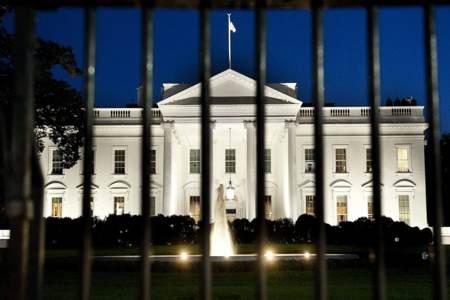
Since the Secret Service was charged with protecting the President only one President has been assassinated. Most wannabe Presidential assassins don’t really need the Secret Service to prevent them from killing the President, though. They are perfectly capable of doing that themselves. Here are the seven dumbest mistakes made by aspiring assassins of American Presidents.
7 Drinking and assassinating do not go well together
On September 12, 1994, a severely intoxicated Frank Eugene Corder, a truck driver from Maryland whose wife had left him three weeks earlier, crashed a stolen Cessna 150 on the White House South Lawn, just 50 feet from the White House residence, killing himself on impact. President Clinton, meanwhile, was sound asleep across Pennsylvania Avenue, at Blair House, because renovations were being carried out in the residence. Which brings us to mistake number six.
6 Not checking if the President will be there
In January 1994, Ronald Gene Barbour, an unemployed limousine driver from Florida, traveled to Washington to shoot President Clinton during one of his morning runs on the Mall. But Clinton wasn’t jogging on the Mall, he wasn’t even in the country, as he was visiting various heads of state in Europe.
Barbour went back to Florida, was arrested and later sentenced to five years imprisonment.
5 Assuming firing at the White House is firing at the President
To many would-be assassins, the White House is an irresistible, annoyingly perfect, beautiful, untouchable and yet seemingly vulnerable symbol of government. Only it’s not. In fact, it’s one of the best protected buildings in the world. Its windows are bullet proof, there are five rings of security between the public sidewalk and the front door and counter-sniper teams on the roof check the perimeter 24/7.
But on the night of November 11, 2011, Oscar Ramiro Ortega-Hernandez—who believed he was Jesus Christ and President Obama was the Anti-christ—nevertheless parked his Honda directly south of the White House, pointed his AK 47-style semiautomatic rifle out of the passenger window, aimed at the big white building some 700 yards away, and fired. At least seven bullets struck the White House, but none penetrated the bulletproof glass.
It took the Secret Service four days to even realize shots had hit the White House. Ortega-Hernandez was sentenced to 25 years imprisonment.
4 Not checking if the gun is loaded
Every gun safety instruction emphasizes checking if there’s a bullet left in the chamber after taking out the magazine. Of course, when you actually do want to fire a gun it is equally important to check if there is a bullet in the chamber. Luckily for President Gerald Ford, that was the one thing Lynette Fromme forgot to do.
Fromme was only two feet away from Ford when she drew a Colt .45 pistol from her leg holster and aimed it at the President. But although the gun had four bullets in the magazine the chamber was empty, because the 26-year-old woman had been unaware she needed to pull back the gun slide first to load a bullet in the chamber. As a result, the gun went click instead of bang.
Fromme was sentenced to life imprisonment but released on parole on August 14, 2009.
3 Assuming the president opens his own mail
One of the more bizarre presidential assassination attempts involves an Elvis impersonator, a martial arts instructor and a ricin-laced letter. On April 17, 2013, a suspicious package addressed to President Obama was intercepted at the White House mail facility, a remote site where mail is screened for the safety. The package turned out to contain ricin.
Before long, the FBI arrested Elvis impersonator Kevin Curtis, on the ground that the letter contained a very specific quote used by Curtis on his Facebook page. But after hours of questioning the FBI began to doubt Curtis had sent the letters. The Elvis impersonator himself suggested he was probably framed by one Everett Dutschke, a martial arts instructor with whom he had been locked in an online feud.
A few days later, Dutschke was arrested. He later pleaded guilty and was sentenced to 25 years in federal prison.
2 Bringing a knife to a gun fight
Over the years, several would-be assassins have chosen a knife as their primary weapon. But Secret Service agents are not armed with knives. Their standard issue sidearm is the SIG Sauer P229. The chances of success when attempting to kill the President of the United States with a knife are therefore slim—very slim—to none.
On October 4, 1978, Anthony Henry, barefoot and dressed in a white karate uniform, nevertheless scaled the wrought iron fence around the White House armed with a knife and stormed toward the North Portico, before being cut off by White House guards.
Spinning around in various defensive karate stances and fending off lunges from guards positioned in a ring around him as if they were filming a Bruce Lee movie, Henry was eventually wrestled to the ground. He said he had only wanted to convince President Carter to remove the phrase ‘in God we trust’ from U.S. currency.
1 Thinking it will make a difference
For aspiring lone wolf assassins, many of them powerless and disenfranchised, the act of killing a President, the living symbol of government, might represent a moment of triumph against a system — a life, even —that they feel has failed them in every way. The kind of act that could make everything right in one fell swoop, transforming them from a no one into a someone.
Only it wouldn’t. At least not to the extent that their life would improve, because presidential assassination carries the death penalty.
And politically speaking assassinating a U.S. President probably would not make much sense either, since the Vice President is of the same political party and a presidential assassination does not trigger new elections.
In other words, contrary to his popularity among would-be assassins, for those seeking to make a political difference by assassinating a world leader, there are certainly better candidates than the American President.
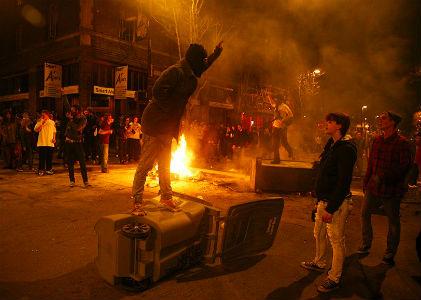
Liberals have grown alarmingly intolerant towards people espousing views at odds with their own. Oppose Black Lives Matter and you are immediately accused of being a racist, voice reservation against Muslim immigration and you are a fascist, oppose abortion and you are a misogynist, object against men entering women’s bathrooms and you are anti-LGBT.
“That is not who we are”, liberals including Michelle Obama and Hillary Clinton like to say in a warning voice, wagging their finger. A phrase at once claiming moral superiority in deciding what it means to be American and branding everybody else morally inferior, part of the “basket of deplorables”, undesirable.
Let’s call that out for what it is: bigotry.
If liberals were to limit their intolerance of those they consider their moral inferiors to name-calling, peaceful protesting and giving verbally aggressive, high-minded speeches in the vein of “when they go low we go high” (never mind that they do the exact opposite) that would be okay — if also arrogant and little helpful in bridging the divide. Lately, though, a fast-growing group of extremist liberals some are already calling the alt-left is showing an increasing willingness to use any means necessary — including violence — to shut down any and all opposition to their views.1
Like harassing students at UCLA who want to hear a speech by conservative political commentator Ben Shapiro. Or intimidating attendees of a speech by alt-right leader Richard Spencer at Texas A&M University. Or rioting at UC Berkeley to prevent conservative provocateur Milo Yiannopoulos from speaking there. And that is not okay.
Who and what should be considered part of the alt-left is still subject to debate. It is a loosely affiliated group of extremist liberals — anarchists, self-proclaimed anti-fascists, communists and eco-terrorists among them — that shares ideological similarities with the militant radical left of the 1970s/80s. What they have in common is a denouncement of the current political order, a disregard for equal protection of constitutional rights and a sense of moral superiority over people of different political persuasion.
Everybody who disagrees with them is branded with the mark of The Undesirable — a fascist, racist, bigot, homophobe — to justify suppressing their speech. Like most fanatic ideologues, alt-leftists see little point in debate, because they already consider themselves privy to the absolute truth.
The alt-left’s sense of moral superiority and righteousness, its intolerance towards the other and its focus on free speech suppression has its ideological roots in communist revolutionary doctrine, which holds that the revolution can only succeed if all dissent is suppressed. A doctrine that was taken to heart by the Soviet Union and its Eastern European Satellite States, the Cambodian Khmer Rouge, Fidel Castro’s Cuba, Mao Zedong’s China — especially during the Cultural Revolution of the 1960s/70s — and North Korea, to name a few.
One of the organizers of the Berkeley riots, Yvette Felarca, recently appeared on Tucker Carlson Tonight to defend the use of violence against everyone meeting her broad criteria of fascism, even if they weren’t doing anything —evidenced by a clip showing how she and others assaulted and beat up a lone protester standing on what looked to be a public street. A middle school teacher, Ms. Felarca expressed pride in the fact that she and others were able to “shut down” Milo Yiannopoulos and suppress his right to free speech.
Ms. Felarca’s aggressive, harsh rhetoric is reminiscent of Mao Zedong’s fanatical wife Jiang Qing, a central figure in China’s Cultural Revolution, who also sought to “shut down” people with dissenting opinions. Qing famously said “there cannot be peaceful coexistence in the ideological realm. Peaceful coexistence corrupts.”
And to think that in 1964, two years before the Cultural Revolution erupted, students of the Free Speech Movement at UC Berkeley demanded the university administration lift the ban of on-campus political activities and acknowledge students’ right to free speech. A lot has changed in 50 years.
To be sure, Mr. Yiannopoulos is a first-class provocateur, a self-described internet troll who loves nothing more than baiting liberals and railing against everything established, sacred and politically correct. Radical, inflammatory dissent seems a natural match for his flamboyant personality — not to mention the foundation of his infamy and success. But the fact that he keeps testing the fences and voices appalling opinions does not mean his right to free speech should not be protected. On the contrary.
It is in the protection of the rights of the most hateful, controversial people a society proves its true level of commitment to those rights. The right to free speech, especially, is the kind of civil liberty that cannot be protected by the judiciary alone. The people themselves have a role in its protection as well, by allowing others to exercise it. In the absence of active support within the community, the right to free speech can and will quickly erode, as it has in Russia, Turkey and at college campuses across the United States.
According to censorship watchdog fire.org, more than 200 American colleges and universities now have speech codes that “unambiguously impinge upon free speech”. Under the guise of “trigger warnings”, “microaggressions” and other political correctness, today’s students are allowed to shy away from parts of a course they are uncomfortable with and are discouraged from discussing certain sensitive topics, such as affirmative action policies. Meanwhile, students who want to exercise their constitutionally guaranteed right to free speech are often restricted to small “free speech zones”.
This needs to stop.
Universities and colleges need to reaffirm their role as defenders of academic freedom and stop pandering to the alt-left, no longer allowing students to use excuses not to have to engage in discussion, no longer letting them retreat into safe spaces and safe housing to shelter themselves from those with a different political identity and no longer limiting their right to free speech in any way. If they don’t, they should lose all federal funding.
Because if today we allow the alt-left to bully universities and colleges into curtailing free speech, watering down the political discourse and shutting down those with different political views, how can we expect their students to defend our constitutional rights tomorrow?
This article was first published on The Daily Caller under the title 'Alt-Left: The New Bigot On The Block', where it was shared more than 5,000 times.
1 After the article was published on the daily caller, I was contacted by several people who said they are part of an alt-left that is the exact opposite of the alt-left I described. They hold that what I and others identify as the alt-left is actually the "regressive left, far left, Authoritarian-social-marxist", to quote one person who contacted me. Another wrote that "the alt-left is libertarian left." Obviously I did not set out to appropriate the name 'alt-left' from the left wing of the libertarians. However, other political writers had already begun using the moniker 'alt-left' before I did to describe the radical left — and not without reason. Because with the rise and now widespread use of the moniker 'alt-right' to denote the extreme, radical right, it is only logical to capture the extreme, radical left with the term 'alt-left'.

Eight years ago, many hoped, declared even, that with the election of the first black President, America would finally enter a post-racial society. In hindsight, it seems silly to believe that centuries of institutionalized slavery, segregation, degradation and disenfranchisement could be wiped out with a single event, however powerful. But as distrustful, anxious and divided the country is today, as hopeful and united it was in 2008.
What went wrong?
Obama’s election did prove the country had become less racist, but in and of itself it did nothing to improve the position of African Americans. During the eight years he was in office, there were a lot of steps Obama could have taken in the direction of righting the remnants and reverberations of centuries of wrong. Getting elected President was not the finish line, it was the starting point.
Of course today’s racism is not your grandfather’s racism—or even your father’s. Racism is no longer policy in the United States (it is baffling that there are people alive today who were born when it still was). The American government no longer enforces racism, its laws are no longer racist and it no longer tolerates people to be racist. That doesn’t mean there aren’t any white racists in positions of power who try to enforce laws in a racist way—just as there are black racists in positions of power, it is not 1960 anymore—but that is still a far cry from state officials enforcing segregation in schools and buses with the law on their side.
And yet, a disproportionate number of Blacks still grows up poorer than Whites, has less food security, less access to quality education and receives less attention from their parents because their mothers are working long hours and their fathers are in jail (or worse). This in turn makes it harder for young Blacks to get into (a good) college, leading to another generation being stuck in minimum wage jobs.
What causes this self-perpetuating negative cycle? Is it racism? Most black activists and black civil rights organizations like the NAACP and Black Lives Matter say yes. They argue that Whites continue to dominate society and discriminate against Blacks, especially through disenfranchisement and the criminal justice system.
That Whites continue to dominate American society is a fact. They also constitute the largest racial demographic, though, making up about 62 percent of the population (the figure rises to 77 percent when including White Hispanics). Blacks are the largest racial minority, accounting for about 13 percent of the population.
If you are surprised at how low the percentage of African Americans is, you are not the only one. Gallup research reveals that a majority of Americans significantly overestimate the percentage of the population that is African American, putting it at 30 percent or higher. Close to one fifth of the population even thinks it’s 50 percent or more. According to Gallup, lower-income and nonwhite Americans are most likely to overestimate U.S. populations of Blacks and Hispanics. The average nonwhite estimates that 40 percent of the U.S. population is black and 35 percent is Hispanic.
Such overestimation could make America seem more racist than it actually is, since the correct, proportionate slice of black representation in leading roles in politics, business and culture is three times(!) smaller than nonwhites estimate it should be.
The government institution that black civil rights activists most often point to as evidence of continued widespread, systemic racism by a white-controlled government is the criminal justice system. African Americans are more likely to be stopped by the police, searched by the police, more likely to be arrested for possession and/or dealing of drugs, more likely to be incarcerated and sentenced to longer prison terms.
Anti-racist activists have for decades maintained that the criminal justice system must be racist, simply because such a disproportionate high number of black males is in jail. Given this indisputable fact—Blacks were incarcerated at a rate more than five times that of Whites in 2016—arguing that the cause could be something other than racism seems almost racist by default.
Yet a recent study found no evidene of racial discrimination in criminal justice processing when self-reported violent behavior and IQ are taken into account. In other words, according to this study African American males are indeed significantly more likely to be arrested and incarcerated than Whites, but they are also significantly more violent and have lower IQs than Whites.
Now, before everyone flies off the handle, poor education has long been associated with lower scores on intelligence tests, and if kids are left to their own devices from a young age they are also likely to become more violent.
Which begs the question: can society turn someone into a criminal? Can it make someone more violent, less articulate, increase the chance someone ends up in jail, by withholding parental care, food, the chance of a good education? I would say so. Victor Hugo’s Jean Valjean didn’t steal a bread because he didn’t want to pay for it, but because he couldn’t.
Perhaps, by constantly talking about White racism, the supposedly racist criminal justice system and a police force that supposedly uses lethal force more often against Blacks than Whites—a point of view that has been disproven by a recent Harvard study—black civil rights groups are focusing too much on the results of systematic unequal opportunity instead of its causes.
African American history is rooted in centuries of slavery, oppression, segregation and forced ignorance. After the last state-sponsored racist barriers were taken down in the 1960s, what remained was a free but poor and undereducated black minority population that had to compete with a never enslaved, better educated, richer white majority population.
Though this new society could be called post-racist—at least from a governmental policy point of view—it is certainly not post-racial, considering how little has been done to remedy African Americans’ unequal and unfair starting point. And that situation still exists today.
Giving lofty speeches and pardoning black criminals may provide hope and relief, but they do nothing to attack the underlying causes of racial inequality. For that, it would have been better if the first black President of the United States had thrown his weight behind free education and a guaranteed basic income for all citizens.
Because when the next generation of African Americans gets an equal start in life, when they get an equal chance at a good education, an equal chance to prove themselves and be all they can be, they won’t have to be pardoned by presidents. Perhaps then we can start talking about living in a post-racial society.

We are on the cusp of a seismic socioeconomic shift, one even bigger than the Agricultural Revolution that began 12,000 years ago and which transformed human societies from hunting and gathering to farming. Bigger also than the Industrial Revolution that began around the mid-18th century and transformed societies from mostly rural to urbanized centers of mass production and consumption. We are in the midst of an unprecedented Technological Revolution and on the verge of a Robot Revolution that threatens to make most people economically useless. Actually, it is more like a promise.
Robotization
Because when all retail will have moved online and all packages will be delivered by drones; when all factories, farms, and mines will operate fully automated; when all soldiers will have been replaced by military robots; when all hamburgers will be grilled, prepared, and served by machines; when all administrative jobs will have been taken over by powerful software programs, and all cars, trucks, and buses will be driving themselves—what are the sales people, delivery people, factory workers, farmers, miners, soldiers, fast-food employees, administrative personnel, cab drivers, truck drivers, and bus drivers going to do?
Do you think we can all be programmers, app developers, data analysts, lawyers, doctors, nurses? Or that the impending large-scale robotization of the work floor will magically create millions of those "good jobs" former presidential candidate Hillary Rodham Clinton was always so fond of summoning whenever the topic of discussion turned to the negative effects of globalization on the working class?
Think again.
In a 2013 report on disruptive technologies, the McKinsey Global Institute (MGI) estimated that by 2025, as much as 25% of industrial-worker tasks across occupations such as manufacturing, packing, construction, maintenance, and agriculture could be automated cost-effectively. And these jobs will not return or lead to a significant number of other jobs—at least not ones requiring human workers.
As the robotics industry continues to mature, this trend will likely continue, pushing an increasing number of low-skilled workers out of the production process. In a 2012 report, MGI also estimated that out of a global workforce of 3.5 billion in 2030, there will be 90 million to 95 million more low-skilled workers than employers will need, which will be an 11% oversupply of such workers.
Globalization
Of course, technological advances have been destroying manufacturing jobs for decades in the developed world, both by outright eliminating them and through the facilitation of globalization. This subsequently caused a wage-labor race to the bottom, simply because it became that much easier for companies to move production to wherever labor was cheapest. Jobs have moved from the US to Mexico, from Germany to Spain, from the Netherlands to Poland, and from China to Southeast Asia.
Meanwhile, technological advances made since the early 1990s have also brought globalization to tens of millions of medium- and high-skilled jobs, as the proliferation of the commercial internet has given rise to online freelance marketplaces like Upwork, Freelancer, and Toptal. Designers, translators, programmers, web developers, and other creatives can offer their services globally through these platforms, working from home. But compensation levels often reflect where the freelancer is based, which puts urban-dwellers at a disadvantage: After all, an English-to-Spanish translator based in New York City cannot expect to be paid New-York-City-level compensation when competing with translators from small-town New Mexico or rural Spain.
This is only logical. Production moving to wherever it can be done cheapest, easiest, and fastest is a core characteristic of globalization and the ultimate outcome of unhindered capitalism, which is itself an amoral economic system unconcerned with what is “right”—only with what is profitable.
During the 2016 presidential campaign, globalization was targeted by candidates on the left as well as the right. Both Bernie Sanders and Donald Trump railed against the North American Free Trade Agreement (NAFTA) and the Trans-Pacific Partnership (TPP). Trump has repeatedly said he will not ratify the TPP as president, arguing it has cost millions of American jobs. (Hillary Clinto, by contrast, said in 2012, while serving as secretary of state, that the TPP “sets the gold standard in trade agreements to open free, transparent, fair trade, the kind of environment that has the rule of law and a level playing field.”)
But can (and should) globalization be stopped?
Trump seems to think so. He has repeatedly talked about forcing US companies to keep production domestic, tempting them with tax incentives to repatriate production and slapping high tariffs on foreign countries. Pretending for a moment that these kind of neo-mercantilist policies could work in the short run, the repercussions would likely be equally disruptive, triggering multiple trade wars, making American-made products less competitive globally and stifling investment in US businesses.
But even if globalization could be slowed down (which it cannot), it would still not prevent companies from supplanting human labor with cheaper, faster, and more efficient robot labor wherever possible. We are entering an era where the economic value of an ever-growing group of people will be reduced to zero.
The cold, hard truth is that we are fast approaching a moment where, for the first time in history, the economic need for low-skilled workers will largely cease to exist. Moreover, ongoing technological advancement and robotization will continue to raise the bar on what counts as medium-skilled and high-skilled labor, thus increasing the portion of the workforce deemed “low-skilled.” Job retraining could help ameliorate the problem, but many of the people impacted by these changes cannot afford to take time off work and go back to school because of systemic practical issues.
We are entering an era where the economic value of an ever-growing group of people will be reduced to zero. They will no longer be able to sustain themselves independently, because they will no longer have anything to sell.
The threat that the rapidly changing economic landscape poses to the working class of the 21st century is more existential, more profound and more permanent than the threat that industrialization posed to the working masses of the 19th and early 20th century. Back then, large corporations still needed—and would continue to need—large labor forces, which meant workers could make themselves heard through collective bargaining and, at times, massive strikes. At the same time lawmakers also introduced a host of labor laws, aimed at improving workers’ socioeconomic conditions.
The solution
With rapid technological advances swinging the pendulum once more in the direction of poverty and social injustice for tens of millions of Americans, it is time for the government to step up again and ensure we will remain a stable, prosperous, and successful society in the 21st century.
Each citizen should therefore receive a guaranteed basic income equal to the poverty line ($11,800 in 2016, according to HHS) and free access to secondary education and consumer technology. This would sustain those who are no longer able to sustain themselves and enable the rest to compete more successfully in the global marketplace.
Apropos, implementing these measures would also benefit corporate America, which, after all, has little to gain from its customers living in 19th century poverty and has a growing need for high-skilled labor in the decades to come (it is estimated that globally there will be 13 percent fewer college or postgraduate degree workers than employers will need in 2030).
The cost
This will be a costly and complicated endeavor—but it is possible. The Census Bureau estimates that in 2016 there are about 192 million Americans between the ages of 18 and 65 (the age when Social Security would kick in for support). As the poverty line is $11,800, giving each working-age American a basic income equal to the poverty line would cost $2.26 trillion.
This may seem a huge sum, but adopting a basic minimum income would allow for the elimination of other government benefits for low-income Americans, such as SNAP, TANF, and housing vouchers. As Danny Vinik notes when discussing the concept of a basic income, that would amount to a cool trillion when factoring in state programs, leaving a gap of $1.26 trillion.
How to pay for it
This gap is where corporate America comes in.
Many US companies are not paying the 35% tax rate. In 2014, Apple Inc. paid an effective corporate tax rate of 0.005% on its European profits, and they are certainly not the only US company avoiding paying taxes through ingenious overseas tax constructions. US companies held a total of $2.1 trillion in profits overseas in 2014 to avoid paying the 35% corporate tax rate, which would amount to $735 billion in taxes.
When confronted with their low effective tax rate, companies often respond that they are simply following the rules and pay what is required by law. The obvious solution, then, is to change the corporate tax code so that law-abiding corporations can better protect the economic viability of their customer base. If we close the tax loopholes, companies can contribute to saving America’s socioeconomic landscape.
A version of this article was published earlier at Quartz (qz.com), under the title 'A return to big government is the best way to protect America's working class from globalization'
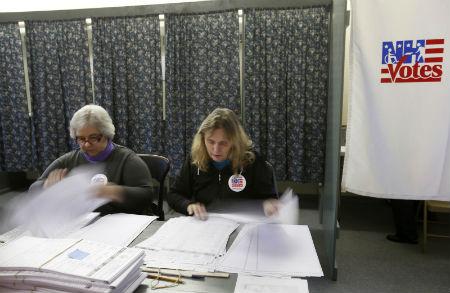
By demanding an audit and recount of the presidential election results in Wisconsin, Michigan and Pennsylvania, Green Party nominee Jill Stein and the Clinton campaign are playing into the narrative that the elections might have been manipulated and that Donald Trump might not be the legitimate President-elect.
And although the Green Party and the Clinton campaign —which on Saturday joined the recount— have every right to demand a recount, they are playing a potentially dangerous game, considering what their options are should the recount unearth actual evidence of voting manipulation.
So far, both campaigns are selling the recount more as a way to examine the fairness of the electoral process than as a late stage effort —very late-stage— to deny Donald Trump the White House, but of course every whiff of irregularity would nevertheless undermine the legitimacy of the incoming president.
The Clinton campaign was also quick to rekindle suspicions of possible Russian interference in the elections, with Marc Elias, the campaign’s counsel, writing that “this election cycle was unique in the degree of foreign interference witnessed throughout the campaign: the U.S. government concluded that Russian state actors were behind the hacks of the Democratic National Committee and the personal email accounts of Hillary for America campaign officials.”
I cannot help but wonder what the response of the Clinton campaign would have been had Hillary Clinton won the election and the Trump campaign would have demanded a recount two weeks after the elections had ended.
A little over a month ago, at the third presidential debate, Mrs. Clinton called the prospect of Donald Trump possibly refusing to accept the results of the presidential election “horrifying”.
“That is not the way our democracy works,” Clinton said at the time. “We’ve been around for 240 years. We have had free and fair elections. We’ve accepted the outcomes when we may not have liked them.”
Why would it be ‘horrifying’? Because as paradoxical as it may sound, the relevance of modern democracy as a political system goes beyond the fact that it is the people who are electing new rulers and law makers. The peaceful transition of power at regular, predetermined intervals is at least as important. That is what makes democracy a so much better safeguard against revolutions, uprisings and civil wars than autocracy. (One only has to look at civil war-torn Syria to see the validity of this point).
But once the losing side starts questioning and stops respecting the outcome of the electoral process, its function of bulwark against political instability quickly erodes, and with potentially devastating effects.
Meanwhile, Democrats are also mounting an effort to use the Electoral College for what they argue it was intended, a last line of defense against electing a President unfit for office.
Remembering Alexander Hamilton, who once said the Electoral College exists to ensure that “the office of President will never fall to the lot of any man who is not in an eminent degree endowed with the requisite qualifications,” Democratic Electors Michael Baca of Colorado and Bret Chiafalo of Washington state are trying to persuade Republican electors to vote for someone other than Trump.
Chiafalo justified trying to sway Electoral Collage votes by arguing that “we’re trying to be that ‘break in case of emergency’ firehose that’s gotten dusty over the last 200 years. This is an emergency,” while Michael Baca insisted that “we must do all that we can to ensure that we have a reasonable Republican candidate who shares our American values.”
It all sounds very lofty, but what it comes down to is that in the eyes of Baca and Chiafalo, the decision what a ‘reasonable’ Republican candidate is should apparently be left to 538 people, rather than 219 million eligible voters. In effect, what they are proposing is for the Electoral College to transform the United States from a democracy into an oligarchy not unlike Russia, China and North Korea. Not exactly the kind of political system we should envy, I should say.
But let’s suppose they succeed. Let’s suppose they are able to convince enough Republican electors to vote for a ‘reasonable’ other Republican. Or that the Green Party and Clinton campaign’s recount effort in Wisconsin, Michigan and Pennsylvania — where, according to computer scientists, Clinton received 7 percent fewer votes in counties that relied on electronic-voting machines compared with counties that used optical scanners and paper ballots — turns up actual evidence of voter tampering.
What then?
Would President-elect Trump accept it? Would Republican law makers, governors and generals who have just woken up to the fact they could benefit greatly from a Trump presidency, both politically and personally, accept it? Would Trump’s energized tens of millions of supporters, who have attached their hopes and dreams to his promise of making America great again, accept it?
No, of course they wouldn’t.
And if they don’t, how long would it be before tens of millions of Clintonians start marching through the streets, demanding the Electoral College give the vote to Hillary? And if it did, how long would it be before tens of millions of Trumpists start marching through the streets, demanding Congress to refuse certifying the Electoral College results? And what would be the stance of the Obama administration? Would they continue to work with Donald Trump’s transition team, or would they shut them out and start working with Hillary Clinton’s hastily reassembled transition team instead?
Before long, the Supreme Court would have to be called upon to prevent the country from falling further into political disarray, as it did back in 2000. More than any other institution, the Supreme Court is considered the nation’s last line of defense against total chaos. If only the Court itself were not hopelessly divided as well, 4-4.
And then what?
The checks and balances within the Constitution can protect the people against any one branch of government becoming too powerful, but ultimately, no Constitution can protect a divided nation from falling apart. Only the people can.
The uncomfortable truth is that no one will be able to prove conclusively that the elections were not hacked on any level. But at a moment when the country is perhaps more divided than it has been in 150 years, we should focus on the peaceful transition of power, rather than continue digging for even more divisiveness.
A version of this article appeared earlier on Quartz, titled 'An election recount will only further divide a fractured America'.
- Details
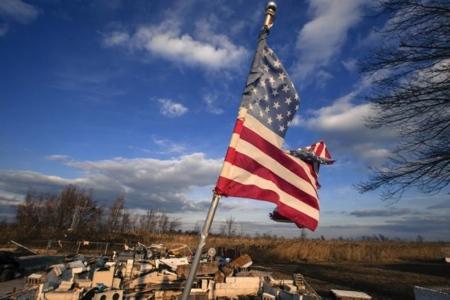
Before last week, the last time large-scale demonstrations had broken out against a President-elect who had secured a clear-cut victory was in 1860, when Abraham Lincoln won the presidential election with virtual no support from the Southern States.
Things were a lot simpler back then.
Opposition to Lincoln’s (moderate) anti-slavery platform was near absolute in the South, making it relatively easy for the Southern States to come up with a seemingly perfect solution: secession.
Lincoln could have decided to let the Southern States leave—after all, why would thirteen colonies have the right to break away from an empire but seven states not be allowed to divorce from a union, an argument that would have certainly found sympathy among Presidents Woodrow Wilson and Franklin Roosevelt, both strong advocates of the right to self-determination—but instead chose to try and hold the Union together whatever the cost.
Had the same situation existed in the world of today, Lincoln would not have had that option. War may be the continuation of policy by other means, as Clausewitz wrote, but it is no longer considered an acceptable means to an end.
Had South Carolina, Mississippi, Alabama, Florida, Georgia, Louisiana and Texas therefore seceded today, the U.S. Supreme Court might still have nullified the move—as it did, retroactively, in Texas v. White, in 1869—but in the face of continued defiance, the North would have little choice but to accept the new reality.
Standing in the middle of the protesting crowd tirelessly shouting at the big black Trump Tower on Fifth Avenue, in the weekend after the election, I cannot help but wonder if it would not have been better to simply let the Southern States go in 1861. A staggering total of 620,000 soldiers lost their lives during the Civil War, more American soldiers than in all other U.S. wars combined. And yet here we are, more than 150 years later, still grappling with an enormous cultural divide between the Northern and Southern States (and their ideological allies in other states).
You would think that over the course of a century and a half, much of that divide would have been ironed out through shared history, increased mobility and growing diversity. But looking at the facts, the opposite seems true.
If anything, the 2016 elections have shown that the divide between progressive and conservative America is much deeper, much broader and much more time-resistant than many people realized. And although the regional differences aren’t nearly as absolute as they were in 1860, the Coastal States of America is still very different country from the Conservative States of America.
I’m standing beside a curvy young black woman, who is rhythmically banging out a solemn yet ominous call-to-arms on a big white plastic bucket, accompanying protesters who are shouting out a variety of slogans:
Show me what democracy looks like — this is what democracy looks like!
We—reject—the president elect!
Whose streets—our streets!
In another place, another time, it could have been the beginning of a revolution. But revolutions need an injustice, something to rail against and which can be remedied through different policies, the adoption of a different political system. There was no injustice here, though, the Democrats only lost an election.
And yet there was a rebellious whiff of ‘why should we even care about this other America’ in the air. Why should we care about rustbelt America, rural America, Midwest America, Deep South America? More than anything else, these protesters, young, diverse, inclusive, progressive, seemed impatient to move ahead, with or without the rest of the (United) States.
Meanwhile, there is talk of secession in California, already dubbed #Calexit. Donald Trump won only 33 percent of the cast votes there, 3.2 million votes out of a total population of 39 million. And odds are that the progressive gap between the Gold State and the United States as a whole will only grow wider. With an economy larger than France, there is no doubt California could survive on its own, but would its population really want to secede from the Union?
The instinctive answer is probably not. Then again, rational minds gave the same answer to the question whether Britain would choose to secede from the European Union.
To be sure, the British were never enthusiastic supporters of the project of European unification. And although Europe has made great strides toward its stated goal of ‘an ever closer union’ during the last seven decades, a real, federal union remains elusive. The European Union has its own parliament, its own court, its own currency, a common market and a central bank, and yet Europeans don’t feel European. They feel French, German, Dutch.
Perhaps that is because however noble and rationally sound the concept of European unification, it has proved difficult to overcome the cultural effects of many centuries of European wars and nation building. European countries remain first and foremost exactly that: countries. The United States, by contrast, was not born out of a political concept but out of an ad hoc alliance between thirteen relatively young colonies faced with a common enemy.
And yet in the current political climate, in this Age of Isolationism, of resurgent nationalism, of anti-globalism, of cultural radicalism and totalitarian progressivism, the U.S. and the E.U. are both struggling to convincingly sell the concept of unity to their citizens, a growing number of which seem to prefer engaging only with like-minded others, in an ever shrinking echo chamber.
Will there be a Front National-led #Frexit in Europe after the #Brexit? A #Calexit in the United States? Hopefully not. But unless we start refocusing on what unites us instead of what divides us, the West is in danger of throwing away decades, even centuries of unification.
Because at the end of the day, people are not unified by concepts and constitutions, but by shared values.
This article was published earlier on TheHill.com, titled The United States? Not by a long shot.

For weeks, it appeared the Republican Party was headed for imminent civil war. Eminent Republicans disavowed their own presidential nominee, Senators and Representatives seesawed, there were the #NeverTrumpers and the #RepublicanwomenforHillary. It seemed all but certain that Donald Trump would cause a split within the GOP and start his own party (and media empire) after inevitably losing the election.
But after Trump’s stunning victory the shoe is suddenly on the other foot. On the Wednesday evening following the election, angry progressive millennials took to the streets in several cities to protest Trump’s victory, carrying their favorite anti-Trump signs and chanting ‘Not my President’, in defiance of that one cardinal rule without which democracy cannot function: that the losing side must accept defeat and acknowledge the mandate of the side that prevailed.
Meanwhile, in California there is talk of secession. Yes, secession. Apparently it is no longer the exclusive go-to implausible option of deeply conservative Americans howling at the liberal course of the country, now progressives, too, have begun dreaming about their own Shangri-La, where life is communal, organic and morally superior.
For progressive millennials it was quite the year. First they were energized by an angry white voter from Vermont who made European-style socialism cool again, talking about the need for a political revolution, of fixing a rigged economy, making education and health care free for everybody and doubling the minimum wage.
Then they were zapped by the ugly reality of party politics, learning the hard way that support and favors typically don’t go to the outlier who wants to shake up the system, but to the candidate who will defend the status quo, who has rubbed elbows with the establishment and knows what they want to hear.
But in a time where many are fed up with a gridlocked Washington that seems more intertwined with Wall Street and corporate America than with the will of the people, running a Washington insider whom big banks pay $250,000 per speech against a populist outsider who says he is going to fix Washington and bring back jobs, turned out to be a political blunder of epic proportions.
If the Democratic Convention had instead nominated Bernie Sanders, things could have turned out very different. For one, he might have been more successful in getting Democrats—especially millennials—to the polls.
But perhaps even more important is that Sanders, like Trump, is a populist, and even after almost thirty years in Washington, he is still perceived as an outsider. He has railed against the moneyed interests, against the rigged economy, against globalization. And when it comes to the economy and how to make it work again for the middle class, Bernie Sanders and Donald Trump’s views really aren’t all that different.
This election was never about race, at least not for the people in battleground states like Pennsylvania, Michigan, Wisconsin and Ohio, who propelled Trump to victory. It was about jobs. They didn’t vote for Trump because he is white and male, they voted for him because instead of calling them a basket of deplorables, he vowed to be their champion and bring back their jobs. Many of them could have voted just as easily for Bernie Sanders.
One thing is certain: Donald Trump is not a classic Republican and Bernie Sanders is not a classic Democrat. They are essentially third party candidates running on the platform of two parties who between them have nominated all the presidents since the mid-1850s. The fact that they did so well, tells us something about the direction these two parties must move in if they are to remain relevant in future elections.
Because oddly enough, these two septuagenarians are the political bellwethers of a new age, where rapid technolization and robotization, together with ever expanding globalization, are pushing blue-collar workers outside of the production process at an alarming rate, forcing the federal government to step in on a scale not seen in the United States since Franklin Roosevelt introduced his New Deal in the 1930s.
Considering this and the stinging defeat it just suffered running a status quo candidate, the Democratic Party would do well to heed the call of progressive millennials and move to the left. If it doesn’t, it could well be looking at a strong, new progressive party to its left before the next presidential election.
A version of this article was published earlier on CNBC under the title Now, it's the Democrats facing a civil war, on the The Daily Caller under the title Is Civil War Brewing in the Democratic Party, and on several other media outlets.

What if Donald Trump already knows he will become the 45th President of the United States?
What if, after watching The Simpsons episode “Bart to the Future”—which actually predicts a Trump presidency—he has slowly but certainly become convinced of its prophetic veracity (just as he has become convinced he was always against the war in Iraq)?
What if this is why, earlier this year, Trump said “I could stand in the middle of Fifth Avenue and shoot somebody, okay, and I wouldn’t lose any voters, okay?”
Now, if you were Donald Trump and already knew you were going to win anyway, wouldn’t you want to have a little fun with it? Sure you would. And where would be the fun in acting all composed and presidential, being knowledgeable on the issues, sympathetic, trying to be a candidate for all Americans?
Come on, haven’t we had enough presidents already who promised to be of the people, by the people and for the people? That is so last two centuries. You can’t make your mark trying to be that guy in the Internet Age. No sir. In the Internet Age, you have to be LOUD and ridiculous. Fortunately, your talents in both these areas are unmatched by anyone in the history of the world (possibly the universe).
So you take the path never traveled. The path of calling a war hero a loser, of mockingly imitating a disabled person, of branding most Mexicans rapists and thieves (though some, you assume, are good people) and openly flirting with a total ban on Muslim immigration.
Nobody who acted like that would ever be elected President, right? Wrong.
You have it all figured out. The 2016 presidential elections are going to be the greatest, craziest, off the hook, roller coaster elections America—indeed the world—has ever seen. You, the hero, will come out of nowhere. The ultimate Washington outsider, facing down a plethora of experienced career politicians and beating them one by one, before arriving at the final, epic battle with the greatest career politician of them all: Hillary Rodham Clinton.
After the Republican Convention in late July, you are gaining on HRC. But of course it’s way too early for that. No self-respecting hero wins the day in the middle of the game. Only right before the end, when the odds are stacked so massively against him that nobody gives a dime for his chances anymore, does he swoop in and turn almost certain defeat into historic victory.
Just as you prepare to take to the airwaves and insult some random new group to help push your numbers down, the Pakistani-American parents of United States Army Captain Humayun Khan, who was killed in the Iraq War, offer a lending hand by criticizing you at the Democratic Convention. It works, your numbers are falling again. But to make absolutely sure your momentum is really stopped dead in its tracks, you insult the Gold Star mother in a subsequent interview, by implying she stood silently next to her husband at the Convention because she wasn’t allowed to speak.
A few weeks later, in the run up to the first debate, the Khan episode has faded from attention somewhat and you are once again gaining on Clinton. But it is still way too early to start your improbable comeback, so you give a shaky debate performance, gratefully taking every piece of bait Mrs. Clinton throws in your general direction.
After that first debate, Secretary Clinton’s poll numbers are on the march again, but this time you are determined to leave nothing to chance. So you call up one of the producers of “Access Hollywood” and remind him of that open mic conversation you once had on the bus with the show’s co-host, Billy Bush, where you said that “when you’re a star, they let you do it. You can do anything…Grab them by the pussy. You can do anything.”
Surely the numbers of any candidate caught on tape saying something like that would rapidly approach zero, right? Wrong.
In the third and final debate, on October 19, you throw in one last zinger by refusing to say you will accept the election results whatever the outcome may be.
Three weeks later your big moment arrives. Election Night. The polls have been consistently predicting you will lose big, but you know they’re wrong and Bart Simpson’s vision of the future is right.
In the early hours of November 9 you are sitting in front of the TV. And just before you take your baseball bat to pulverize The Simpsons Ultimate DVD collection, you cry out that one word that perfectly sums up the pain of defeat, the frustration of stolen victory and the promise of resistance and revenge. Like a tortured William Wallace at the end of Braveheart, you scream it out one last time, for all to hear: “R I G G E D ! ! !”
A version of this article was published on November 6, 2016, on themarysue.com, under the title Is Donald Trump Treating The Simpsons as Prophecy?
Dear undecided progressive millennial,
You are in a tough spot. For you, the presidential election effectively ended when the fiery septuagenarian from Vermont and his political revolution were defeated by Hillary Clinton and her army of super-delegates. She has been asking for your vote ever since, but the political revolution still beckons and there is an alternative.
Jill Stein of the Green Party wants to erase all student debt, make education free from preschool through university, provide medicare to all, cut military spending in half, tightly regulate Wall Street and increase taxes on the wealthy while cutting them for the poor and middle class. Unfortunately, she is also the candidate for the Green Party.
Does it matter? That is up to you, but you do have a real choice to make.
To be sure, Jill Stein will not become President of the United States in 2017. It is as simple as that. Whether you vote for her or not at all, the outcome will be the same: either Hillary Clinton or Donald Trump will be the next POTUS (should either of them become incapacitated, their party’s national committee would elect another candidate).
But there are other ways to win at the voting booth.
By voting for Jill Stein instead of Hillary Clinton, progressive millennials could help the Green Party candidate make a much better showing at the polls, thus sending a strong message to the Democratic Party to take its left wing more seriously next time around, or risk losing an even bigger portion of the fast-growing young and progressive block to the Green Party.
Would it still be worth it if your vote for Jill Stein put Donald Trump in the White House? To Clinton supporters the answer is of course an unequivocal NO. They argue Mr. Trump is not only spectacularly unfit for the presidency but even dangerous. That he would not just ‘build The Wall’ but also deport eleven million illegal immigrants, wreck the economy, make entire ethnic minorities feel like it is 1950 again and maybe even start a nuclear war.
Now, a good part of this is classic fear mongering, propaganda designed to get your vote. Donald Trump may be many things, but he is not a mad man who is going to blow up the world—and implying otherwise is, frankly, a bit cheap.
But it would be bad. A trade war with China and Mexico, a costly ground war in Syria, strained diplomatic relations with countries around the globe and stepped up anti-Mexican and islamophobic rhetoric, it would all be on the table.
So yes, make no mistake about it, voting for Jill Stein to send a clear message to the Democratic Party could bring four years of bad policies, racist rhetoric and addresses to the nation that move effortlessly from insulting Rosie O’Donnell and bragging about how hot Ivanka Trump is, to boasting the first finished mile of the Great Trump Wall, while en passant advertising Trump steaks, Trump resorts and Trump mouth water.
Alternatively, you could buy into Hillary Clinton’s narrative that she may not subscribe to the progressive direction you want the Democratic Party to move in, but at least she is not Donald Trump. This is true. Just as it is true that if you allow yourself to be used like this every four years—threatened with doom and gloom on the one hand and pandered with hollow promises that never pan out on the other—the Democratic Party will never move in your direction. Realism is the enemy of change.
As Jefferson famously wrote when discussing Shays’ rebellion of 1786-87, an event that helped make the case for political reform at the Constitutional Convention:
“…what country can preserve it’s [sic] liberties if their rulers are not warned from time to time that their people preserve the spirit of resistance? (…) the tree of liberty must be refreshed from time to time with the blood of patriots and tyrants. It is it’s natural manure.”
If you always vote for the lesser of two evils instead of voting your conscience, then that is exactly what you will end up with every single time. A lesser evil.
This article was first published on Palm Beach Free Press, on October 28, 2016.