
promotion
“I want to say, and this is very important: at the end we lucked out. It was luck that prevented nuclear war. We came that close to nuclear war at the end. Rational individuals: Kennedy was rational; Khrushchev was rational; Castro was rational. Rational individuals came that close to total destruction of their societies. And that danger exists today.”
Robert S. McNamara, Secretary of Defense 1961-1968, in The Fog of War (2003)
“Maybe the war has already started up there, while we are doing summersaults here! We’re going to blast them now! We will die, but we will sink them all - We will not disgrace our Navy!”
Captain Valentin Savitsky, commander of the nuclear armed Russian submarine B-59, in the Caribbean near Cuba, 27 October 1962

On 11 October 2002, in Havana, Cuba, the participants at the historic 40th anniversary conference on the Cuban missile crisis learned for the first time that the world had come even closer to nuclear war in October 1962 than had already been known.
Much closer.
Missile experts, journalists, historians and some of the key players during the missile crisis itself, including Cuban president Fidel Castro and Robert McNamara - US secretary of defense during the crisis - learned that a Russian submarine close to Cuba had come to within an inch of launching its nuclear tipped torpedo against the fleet of American ships that had located its position and was trying to force it to the surface.
The submarine in question, B-59, was the flagship of a small flotilla of four submarines, who had departed from their base on the Kola Peninsula in northwest Russia on 1 October 1962, setting course for the Caribbean. Their mission was to strengthen the defense of the island of Cuba1 against a possible U.S. invasion, but they received new orders while en route, to support Soviet cargo ships delivering arms to Cuba.
That support was deemed necessary by the Soviet High Command after U.S. President Kennedy had ordered the U.S. Navy to enforce a blockade of Cuba, to prevent any more arms - specifically Russian nuclear warheads and missiles - from entering Cuba. It was the least drastic decision Kennedy could have taken after photographs from a U-2 spy plane proved Soviet missiles were being placed on Cuba.
Cuba used to be an ally of the United States, but three years earlier, on January 1, 1959, communist revolutionary leader Fidel Castro (supported by the U.S.S.R) had succeeded in removing Cuban President Fulgencio Batista (supported by the U.S.) from power. Castro wasted no time turning Cuba into a communist state, much to the dismay of the United States. A marxist-leninist single-party state only 93 miles away from the shores of the United States at the height of the cold war was simply unbearable for any U.S. administration, even a relatively liberal one like that of newly elected President John F. Kennedy.
So when Kennedy was informed after his election of an invasion plan, to be carried out by Cuban counter-revolutionaries trained and supported by the CIA, he gave his consent. On 17 April 1961, a small army of some 1,500 Cuban paramilitaries subsequently landed at the southern coast of Cuba, in the Bahía de Cochinos (Bay of Pigs), but they were utterly defeated only three days later by a Cuban army commanded by Fidel Castro himself. It was a humiliating failure for the U.S., attributed to underestimation of Castro and lack of support given to the paramilitaries - in a rather quixotic attempt to retain plausible deniability.
The half-hearted Bay of Pigs invasion also made Kennedy look weak to his Russian counterpart, Chairman Nikita Khrushchev, an impression that only strengthened when the two met for the first time less than two months later, in Vienna.
The son of poor peasants, Khrushchev, a veteran of the infamous Battle of Stalingrad, was a very---
Would you like to read on? Just subscribe + share on Facebook or Twitter and you'll receive the complete chapter for free! |
1 Report on the Progress of Operation Anadyr, 25 September 1962. Source: Volkogonov Collection, Library of Congress, Manuscript Division, Reel 17, Container 26.
"Technically it wasn't so hard—it would not have been hard to exterminate even greater numbers.... The killing itself took the least time. You could dispose of 2,000 head in half an hour, but it was the burning that took all the time. The killing was easy; you didn't even need guards to drive them into the chambers; they just went in expecting to take showers and, instead of water, we turned on poison gas. The whole thing went very quickly."
Rudolf Höss, Commandant of Auschwitz: Testimony at Nuremberg, 1946
In 2008, seventeen year old Eli Sagir got a tattoo after returning from a high school trip to Poland. Nothing too elaborate or complicated, just a number. 157622. When she showed it to her grandfather, he bent his head and kissed it, because he had the same number, in the same spot. Only he hadn't gotten his at a hip tattoo parlor but at Auschwitz concentration camp, nearly 70 years ago. A week later, her mother and brother also had the number imprinted on their left forearm. Several other young descendants of Auschwitz survivors have done the same. They view the number as part of their family history, almost as an heirloom. They want to remember. They want others to remember. Not surprisingly the young numbered forearms trigger reactions far and wide. Some are disgusted, shocked, even angry. Others find it a beautiful gesture.
It was not much different from the various ways Auschwitz survivors treated their own tattoo. Some rushed to the plastic surgeon after the war to have the numbers removed, others view it as a scar that nevertheless needs to be preserved. Still others view it with pride, because it proves they survived. Everything.
For some of the few that remain, surviving started the same year the Nationalsozialistische Deutsche Arbeiterpartei (NSDAP, a.k.a Nazi Party) came to power in Germany, in 1933. NSDAP leader Adolf Hitler had never made a secret about his hatred for the Jewish people (or many other people for that matter), a hatred that was adamantly shared by the rest of the party members, the Nazi party electorate and even many who had not voted for the Nazis. In fact, Jews had been subject to hatred, discrimination and violence for centuries throughout Europe. They were used to it. But this time, in this country, it would be different.
The nazi ideology was centered around the belief in the superiority of the Aryan race, the German people and German culture. To fulfill its perceived destiny of ruling the world, Germany needed to have a strong state, a strong leader and a strong people. To this end the state should be given the means to control and legislate every aspect of society and its citizens, while the leader should be given the means to control every aspect of the state. The people, for their part, should be pure of blood and purpose, willing to sacrifice everything for the good of the state.
Everybody who disagreed with this view was to be considered a disruptive force to the strength of the state and therefore a danger to the security of the state. Everybody who was impure of blood or weak in any other way could not be part of the New Order and should therefore be either reeducated (if only weak) or permanently expelled (if impure). These Unerwünschten (undesirables) included, a.o: Jews, Slavs, Roma, communists, homosexuals, the mentally ill, the disabled, Jehovah’s Witnesses and Freemasons.
But above all, the Jews.
Getting rid of the Jews stood front and center of the Nazi ideology, but actually getting it done posed various practical challenges. It is one thing to shout all manner of things in speeches at beer cellars and backrooms, but quite another to turn those rants into policy. To put things in perspective, an estimated 523,000 Jews lived in Germany alone. They served in the military, they taught at universities, sat on judges benches, worked in factories, as doctors, lawyers, they owned shops, stocks and bonds, employed people, were married to non-jews. Whatever their undesirability, their lives were entwined with all aspects of German society.
Historians still debate whether Hitler had already decided to exterminate all the Jews even before he came to power, but given the different solutions to the 'Jewish Question' the Nazis tried out between 1933 and 1941 it seems unlikely he had, even if only for practical reasons. The Germany of 1933 was very different from the Germany of 1941. For one thing, Germany was not ----
Would you like to read on? Just ubscribe and you'll receive the complete chapter for free! |
"And so they died. And none could be found to bury the dead for money or friendship. Members of a household brought their dead to a ditch as best they could, without priest, without divine offices. Nor did the death bell sound. And in many places in Siena great pits were dug and piled deep with the multitude of dead. And they died by the hundreds both day and night, and all were thrown in those ditches and covered over with earth. And as soon as those ditches were filled more were dug. And I, Agnolo di Tura, called the Fat, buried my five children with my own hands…..And so many died that all believed that it was the end of the world"
The Plague in Siena: An Italian Chronicle, Agnolo di Tura, 1348
In the spring of 2003 the world was gripped by fear of a mysterious infectious disease. The outbreak had started in November 2002, in China's Guangdon province, but had been kept under wraps for months by the Chinese government, until an American succumbed to the disease in a Hong Kong hospital. By then, the World Health Organization (WHO) had already put out a global alert about a new infectious disease of unknown origin in both Vietnam and Hong Kong. It was called Severe Acute Respiratory Syndrome, SARS.
News, rumors and disinformation about the SARS outbreak quickly spread over the internet, igniting fear and panic around the globe. Surgical masks were quickly sold out, more than a few people started hoarding food and business in Hong Kong came almost to a standstill, same for New York's Chinatown, even after Mayor Bloomberg said there were only 10 confirmed cases of SARS in New York.
People were afraid, even if worldwide only a couple of thousand people had been infected so far, because we know what viruses and bacterial diseases are capable of, we know how fast epidemics can go from a few thousand infected people to hundreds of thousands, millions. We know, because it is seared into our collective memory. Influenza, tuberculosis, cholera, tetanus, smallpox, and of course the bubonic plague. We know.
Ultimately, SARS did not become a pandemic. A total of 8,273 cases worldwide resulted in 775 deaths according to the WHO. SARS had a fatality rate of 9,6%, but turned out to be not nearly as contagious or deadly as true global killers, such as the one that had killed between 75 million and 200 million people during the worst pandemic in history, between 1348 - 1350.
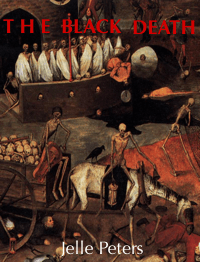
The plague. Just imagine the panic our ancestors of the mid-fourteenth century must have felt when the first cases began to appear. One moment everything was fine, the next people were dying by the thousands. Friends, neighbors, family members, fathers, mothers, sons, daughters. Whole towns were depopulated in a matter of weeks.
Fever, vomiting and diarrhea were the first symptoms, soon followed by the formation of black boils in the armpits, neck and groin. Because of those boils the plague would later be called 'Black Death', but at the time the disease was simply called the 'Great Pestilence'. Of those infected with the bubonic plague, between 40% - 70% died within a week. People infected with the - rarer- pneumonic or septicemic form of the plague had less than 1% chance of survival.
The plague was not a new disease but it is doubtful many people knew that in the 14th century, since the last major outbreak ------
Would you like to read on? Just subscribe + share on Facebook or Twitter and you'll receive the complete chapter for free! |
"I have something to say; It's better to burn out than to fade away!"
The Kurgan, Highlander, 19861
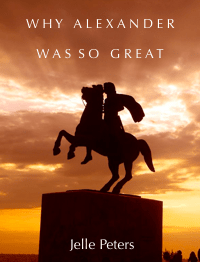
The Temple of Artemis - one of the Seven Wonders of the Ancient World - burnt down on the day he was born. When he was 10, he tamed the wild horse that would carry him through his later conquests. When he was 13, the great philosopher Aristotle became his teacher and when he was 16 he founded his first city. He was proclaimed king of Macedon at 20, pharaoh of Egypt at 24, king of kings of the Persian empire at 26 and dead at 32. He was Alexander the Great.
Alexander III of Macedon was many things. Ambitious, confident, brave, a natural born leader, a gifted military tactician and a successful commander. But most of all, he was restless. From 334 BCE until his death in 323 BCE he conquered his way through present-day Turkey, Syria, Lebanon, Israel, Egypt, Libya, Iraq, Iran, Afghanistan, Pakistan, India, Nepal, Tajikistan, Uzbekistan and Turkmenistan, covering a distance of some 22,000 miles, over an area of 360,000 square miles2.
Why? Was it blind ambition, a belief in divine predestination to rule the world? Was he doing it all to make his father proud, who had had plans of his own to invade Persia before he was assassinated? What kept him going, year after year, country after country, kingdom after kingdom? We don't rightly know. Perhaps Alexander was the kind of young man who always wants to see what comes next; the next city, the next valley, the next country, the other end of the river, the other end of the desert, behind the next hill, the next mountain range. Perhaps what kept him going was the same primal fire raging in the bellies of the great explorers; that, and a massive army of hardened, experienced soldiers carrying 20 feet long spears.
His father - king Philip II of Macedon - had been the same kind of man. He had inherited his kingdom while it was under siege from multiple sides - Paionians, Thracians and Athenians - but had quickly put his house in order by using diplomacy against the first two and crushing the third in defeat. In the 23 years of his reign, Philip would slowly but certainly submit all of Greece to his will, with the exception of the Spartans. He did send them a message once, after having secured control over all the other important city states. It read: "You are advised to submit without further delay, for if I bring my army into your land, I will destroy your farms, slay your people, and raze your city." The Spartans replied with one word: "If"3. Philip decided not to invade Sparta.
When Alexander was 16, Philip deemed him ready for more serious business and left him in charge as regent and heir apparent while he went off to wage war against Byzantium. Philip had barely left when ------
Would you like to read on? Just subscribe + share on Facebook or Twitter and you'll receive the complete chapter for free! |
1 The line "it's better to burn out than to fade away” is originally from a 1978 song from Neil Young, Hey Hey, My My (into the Black). The line became infamous after Nirvana lead singer Curt Cobain quoted it in his suicide note, in 1994.
2 Alexander of Macedon: The Journey to the World’s End. Harold Limb. The Country Life Press, 1946.
3 Plutarch, Moralia, book VI, chapter 38 On Talkativeness (De garrulitate), section 17.